





In
News
Martin Puchner joins global dis:connect
A warm welcome to our new guest Martin Puchner who joins the Kolleg until late spring 2023. Martin Puchner has worked on such disparate topics as modernist closet dramas, revolutionary manifestos, Platonic dialogues, a history of world literature, environmental storytelling and Rotwelsch, the secret language of Central Europe. Having studied at the universities of Konstanz and Bologna, he pursued these topics at Columbia and Harvard, with shorter stints at Cornell, the Berlin Institute for Advanced Study, the New York Public Library and the American Academy. He occasionally attempts to bring the humanities to the attention of a larger public with op-eds, book reviews, essays, anthologies and open online courses. At global dis:connect, Martin will expand his forthcoming history of culture, entitled Culture: the story of us, from cave art to K-pop, into a textbook introduction to the arts and humanities. The work focuses on mechanisms of transmission, with particular emphasis on interruption, misreading, appropriation and — of course — global dis:connections. Continue Reading
1 September 2022


A warm welcome to our new fellow Anna Grasskamp who joins the Kolleg until late summer 2023.
Anna Grasskamp is a lecturer in art history at the University of St Andrews. She has authored Art and Ocean Objects of Early Modern Eurasia. Shells, Bodies, and Materiality (Amsterdam University Press, 2021) and Objects in Frames: Displaying Foreign Collectibles in Early Modern China and Europe (Reimer, 2019). Her articles have appeared in Res: Anthropology and Aesthetics, Renaissance Studies and other journals. Anna is a subject editor at the review journal SEHEPUNKTE and a member of the editorial boards of the book series Global Epistemics and the Journal for the History of Knowledge.
Project:
Trash as treasure: value disconnections and the recycling of Chinese matter in art and design, 1500–2020
Recycling materials ‘made in China’ has a short history in the daily practices of middle-class households, but a long history in global art and design. Chinese natural resources, such as rare-earth metals used in digital devices and commodities like porcelain made of Chinese clay, have been pivotal to material, technological and artistic exchanges between Europe and Asia since early modernity. This project investigates art and design as fields of pioneering research in which strategies to reuse Chinese matter were developed centuries before the term ‘recycling’ – as we use it today – was adopted. It researches material flows of garbage in relation to disrupted material value systems associated with trash. Disruptions take place across cultural boundaries that allow for radical changes in systems of material evaluation (e.g. enabling the perception of ‘trash as treasure’) and through transcultural artistic research, which reuses and re-evaluates seemingly ‘meaningless’ garbage by turning it into multi-million-dollar art installations and prized design innovations. The project offers a non-hegemonic history of art and design, which researches urban hubs and rural ecologies, the works of artists and artisans, as well as the products of craftsmen and factory workers across social, historic and cultural divides.
A warm welcome to our new fellow Martin Rempe who joins the Kolleg until autumn.
A warm welcome to our new fellow Enis Maci who just joined the Kolleg for two fellow stints, one in winter/spring and one in summer 2022.
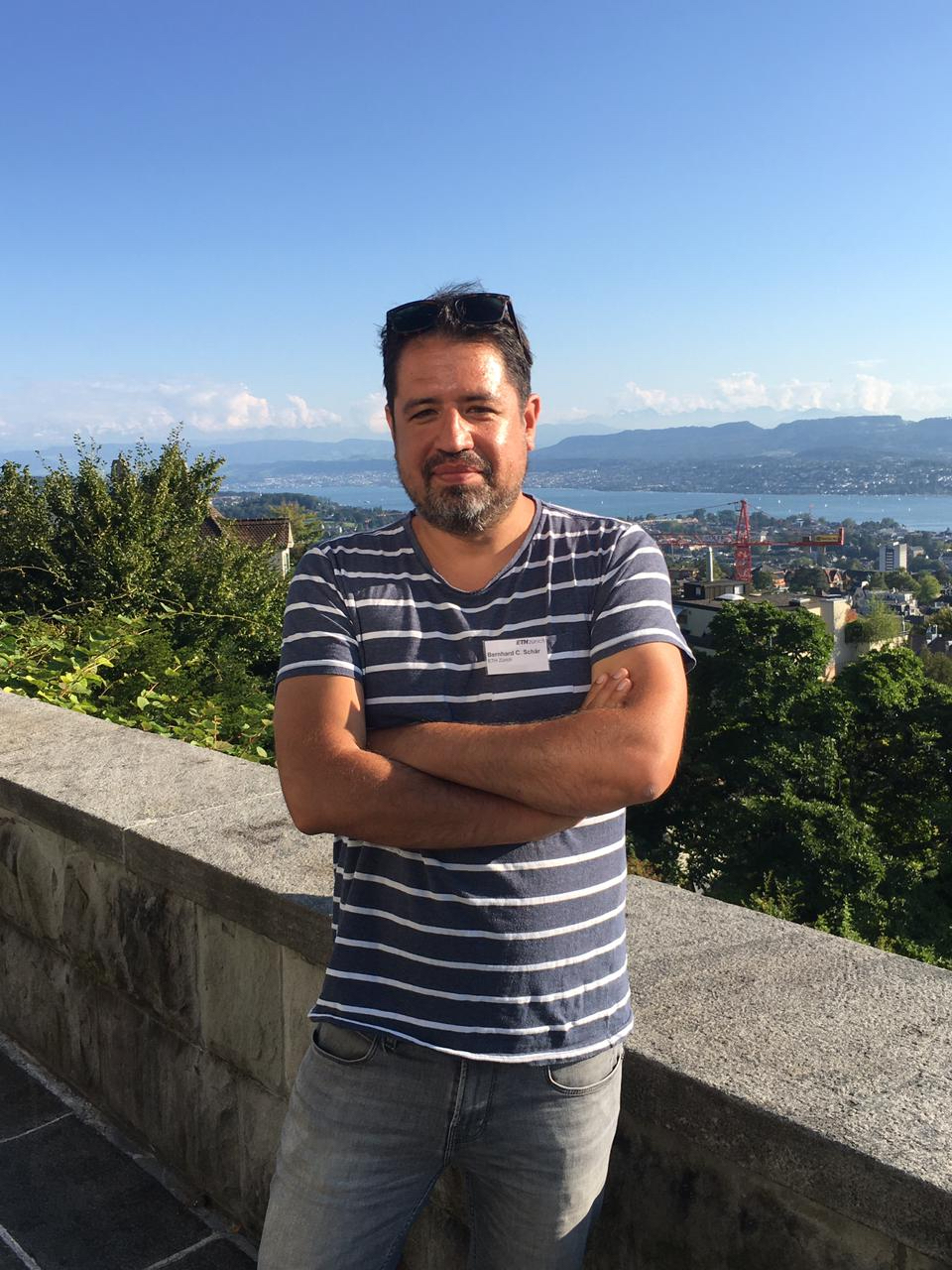
We are very happy to report that today, global historian Bernhard Schär (formerly ETH Zurich) joins our Kolleg as Marie Skłodowska-Curie Fellow. Bernhard is working on a project entitled: „European Mercenaries in the Dutch Empire. A connected History of Imperial Europe and Colonial Indonesia, c. 1800-1900“. You can learn more about the project here: