









Current fellows
The cornerstone of global dis:connect is the fellowship programme, in which approximately ten scholars come to Munich each year. They research dis:connectivity on site and in close contact with the directors and their peers. Fellows also have the opportunity to host workshops on the topics of their research.
Short-term scholarships furnished by the Munich Centre for Global History supplement this programme. Actively integrating the epistemic potential of the arts is vitally important to global dis:connect because they can offer counternarratives to hegemonic discourses, to supposed certainties and to entrenched viewpoints (including scholarly ones). The opportunities — and risks — of artistic research and its critical position towards society and scholarship have barely been incorporated into academic research, methods, practices and results.
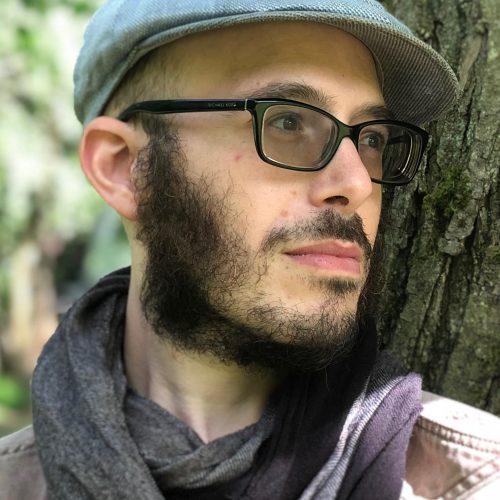
roii ball
Roii Ball is a social historian of 19th and 20th-century Germany and Central Europe and their colonial entanglements. He is a postdoctoral lead researcher at the Religion and Politics Cluster of Excellence at the University of Münster. Ball earned his PhD from the University of California, Los Angeles in 2021 with a dissertation on the social dynamics and bureaucratic practices of German colonisation in the Polish provinces of Prussia before WWI (Advisor: David Sabean).
Roii’s work focuses on family and kinship to explore histories of colonisation and their intersection with empire-making and nation-making. His research interests include the history of knowledge, history of childhood, environmental history, and digital history. He has held fellowships at the University of Cologne, the German Historical Institute in Warsaw, and the Leibnitz Institute for European History in Mainz.
Click HERE for a list of publications.
Click HERE to email Roii.
roii ball
Click HERE to email Roii.
Click HERE for a list of publications.
Roii Ball is a social historian of 19th and 20th-century Germany and Central Europe and their colonial entanglements. He is a postdoctoral lead researcher at the Religion and Politics Cluster of Excellence at the University of Münster. Ball earned his PhD from the University of California, Los Angeles in 2021 with a dissertation on the social dynamics and bureaucratic practices of German colonisation in the Polish provinces of Prussia before WWI (Advisor: David Sabean).
Roii’s work focuses on family and kinship to explore histories of colonisation and their intersection with empire-making and nation-making. His research interests include the history of knowledge, history of childhood, environmental history, and digital history. He has held fellowships at the University of Cologne, the German Historical Institute in Warsaw, and the Leibnitz Institute for European History in Mainz.
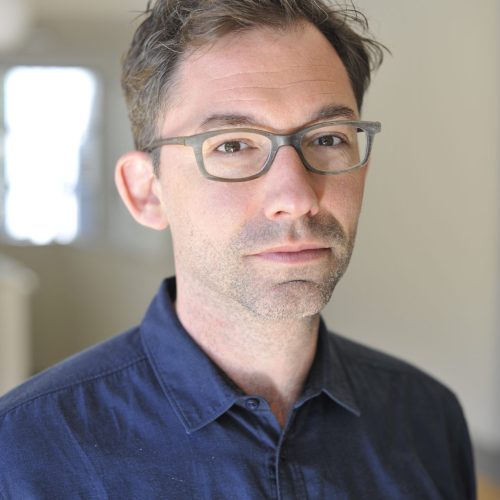
Michael Goebel
Michael Goebel is the Einstein Professor of Global History and co-director of the Frankreich-Zentrum at Freie Universität Berlin. He earned his Ph.D. from University College London (2006) and in 2018–21 was the Pierre du Bois Chair Europe and the World at the Geneva Graduate Institute. Originally an intellectual historian of Latin America, his 2015 book Anti-Imperial Metropolis awakened a growing interest in urban history and, more recently, social and economic history. He is currently the principal investigator of the SNSF-funded project Patchwork Cities.
During his fellowship at gd:c, he’s investigating the interrelationship between globalisation and inequality in Latin American and Southeast Asian port cities, particularly in the late-nineteenth century. His key interest is how the global development of capitalism and imperialism intersected with local socio-economic transformations in urban space, focusing on the interplay between ethnicity, migration and real-estate markets. His research thus connects to scholarship about segregation, but seeks to expand its purview beyond its customary focus on the North Atlantic.
Click HERE for a list of publications.
Click HERE to email Michael.
Michael Goebel
Click HERE to email Michael.
Click HERE for a list of publications.
Michael Goebel is the Einstein Professor of Global History and co-director of the Frankreich-Zentrum at Freie Universität Berlin. He earned his Ph.D. from University College London (2006) and in 2018–21 was the Pierre du Bois Chair Europe and the World at the Geneva Graduate Institute. Originally an intellectual historian of Latin America, his 2015 book Anti-Imperial Metropolis awakened a growing interest in urban history and, more recently, social and economic history. He is currently the principal investigator of the SNSF-funded project Patchwork Cities.
During his fellowship at gd:c, he’s investigating the interrelationship between globalisation and inequality in Latin American and Southeast Asian port cities, particularly in the late-nineteenth century. His key interest is how the global development of capitalism and imperialism intersected with local socio-economic transformations in urban space, focusing on the interplay between ethnicity, migration and real-estate markets. His research thus connects to scholarship about segregation, but seeks to expand its purview beyond its customary focus on the North Atlantic.
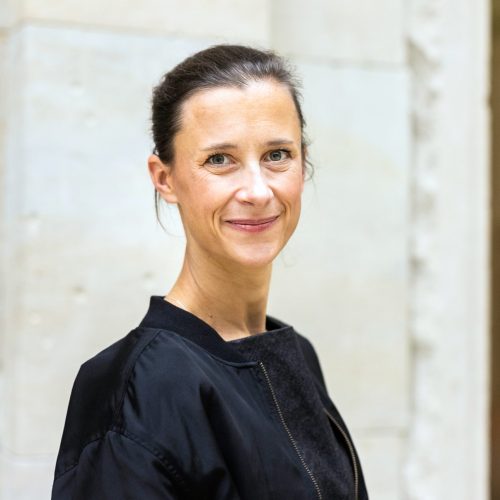
Valeska Huber
Valeska is a professor at the University of Vienna. She has led an Emmy Noether Research Group and has been a fellow at the German Historical Institute London. She is particularly interested in the mutual interdependence of opening and closure. More specifically, she has worked on mobility and migration, on epidemics and international health policy, and on education and literacy training. She has authored Channelling Mobilities: Migration and Globalisation in the Suez Canal Region and co-edited Global Publics: Their Power and their Limits.
Valeska is currently focusing on global publics – their power, reach, and limits. During her fellowship at global dis:connect, she will work on a monograph about the 20th-century dream of universal literacy, tracing the Each One Teach One method propagated by US missionary Frank C. Laubach and applied around the globe from the Philippines to Cuba and Brazil.
Click HERE for a list of publications.
Click HERE to email Valeska.
Valeska Huber
Click HERE to email Valeska.
Click HERE for a list of publications.
Valeska is a professor at the University of Vienna. She has led an Emmy Noether Research Group and has been a fellow at the German Historical Institute London. She is particularly interested in the mutual interdependence of opening and closure. More specifically, she has worked on mobility and migration, on epidemics and international health policy, and on education and literacy training. She has authored Channelling Mobilities: Migration and Globalisation in the Suez Canal Region and co-edited Global Publics: Their Power and their Limits.
Valeska is currently focusing on global publics – their power, reach, and limits. During her fellowship at global dis:connect, she will work on a monograph about the 20th-century dream of universal literacy, tracing the Each One Teach One method propagated by US missionary Frank C. Laubach and applied around the globe from the Philippines to Cuba and Brazil.
Judd C. Kinzley
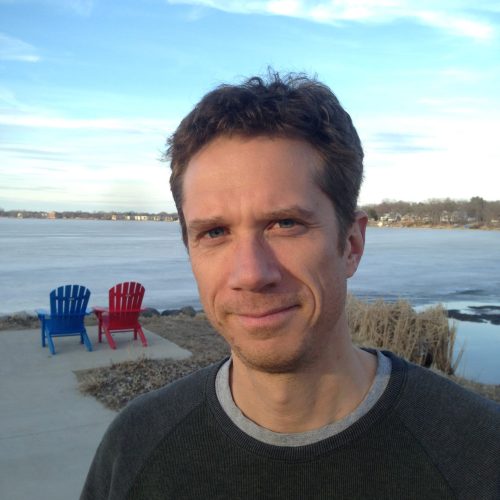
Judd Kinzley is a professor of modern Chinese history at the University of Wisconsin-Madison. His research treats borderlands, materiality and natural resources. He is currently working on the transnational exchange of Chinese raw materials for cash, weapons and industrial goods during World War II. This work reveals the transnational networks that developed to finance, produce and transport such resources. These trans-Pacific networks channelled objects in both directions during the war and served as the blueprint of a new postwar international order.
Judd works in both Chinese and English, with experience researching in several archives in China, Taiwan, the United States and the United Kingdom.
Judd’s project at gd:c focuses on the legacies of Allied wartime oil exports to China, and how brought China, the Middle East, Southeast Asia, the United States and the European imperial powers together. Support of China’s war effort through deliveries of petroleum products relied on the transformation of global petroleum infrastructures that had long connected petroleum-producing regions to imperial metropoles, mostly in Western Europe. Oil transports from Burma and Iran into China during the war served as a detour, an “interruption” that bound the Middle East to the United States and East Asia, reshaping global energy flows.
Click HERE for a list of publications.
Click HERE to email Judd.
Judd C. Kinzley
Click HERE to email Judd.
Click HERE for a list of publications.
Judd Kinzley is a professor of modern Chinese history at the University of Wisconsin-Madison. His research treats borderlands, materiality and natural resources. He is currently working on the transnational exchange of Chinese raw materials for cash, weapons and industrial goods during World War II. This work reveals the transnational networks that developed to finance, produce and transport such resources. These trans-Pacific networks channelled objects in both directions during the war and served as the blueprint of a new postwar international order.
Judd works in both Chinese and English, with experience researching in several archives in China, Taiwan, the United States and the United Kingdom.
Judd’s project at gd:c focuses on the legacies of Allied wartime oil exports to China, and how brought China, the Middle East, Southeast Asia, the United States and the European imperial powers together. Support of China’s war effort through deliveries of petroleum products relied on the transformation of global petroleum infrastructures that had long connected petroleum-producing regions to imperial metropoles, mostly in Western Europe. Oil transports from Burma and Iran into China during the war served as a detour, an “interruption” that bound the Middle East to the United States and East Asia, reshaping global energy flows.
Yvonne Kleinmann
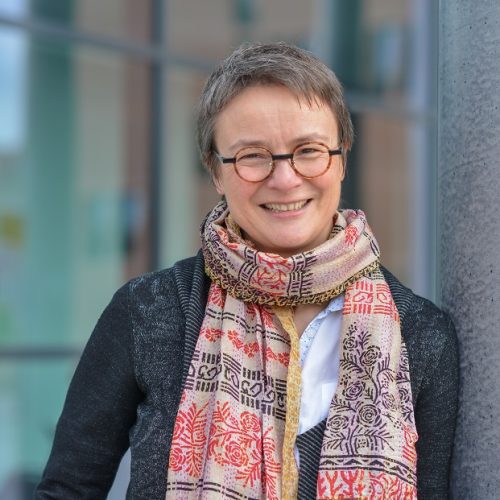
Yvonne Kleinmann is a professor of Eastern European history and director of the Aleksander Brückner Center for Polish Studies at Halle University. Her research focuses on Russian imperial history in comparative perspective, Jewish history of Eastern Europe, and Polish history through the ages. She is especially interested in the intersections between historiography, philology, ethnography and law. In her publications she has explored migrations, interreligious relations, urban history, legal history, anthropology and the history of knowledge.
In her gd:c project Communicating Constitutions: A Cultural and Entangled History of Poland’s Basic Orders, she is analysing Polish constitutional history from the 14th century to the present from the angle of cultural history and (transnational) entanglement. The core question is how to narrate the constitutional history of a community with many political discontinuities and dependencies. Drawing on the example of Poland, the project offers new approaches to constitutional history from the perspectives of imperial history, biographical research, regional history, gender studies, law and literature.
Click HERE for a list of publications.
Click HERE to email Yvonne.
Yvonne Kleinmann
Click HERE to email Yvonne.
Click HERE for a list of publications.
Yvonne Kleinmann is a professor of Eastern European history and director of the Aleksander Brückner Center for Polish Studies at Halle University. Her research focuses on Russian imperial history in comparative perspective, Jewish history of Eastern Europe, and Polish history through the ages. She is especially interested in the intersections between historiography, philology, ethnography and law. In her publications she has explored migrations, interreligious relations, urban history, legal history, anthropology and the history of knowledge.
In her gd:c project Communicating Constitutions: A Cultural and Entangled History of Poland’s Basic Orders, she is analysing Polish constitutional history from the 14th century to the present from the angle of cultural history and (transnational) entanglement. The core question is how to narrate the constitutional history of a community with many political discontinuities and dependencies. Drawing on the example of Poland, the project offers new approaches to constitutional history from the perspectives of imperial history, biographical research, regional history, gender studies, law and literature.
Matthias Leanza
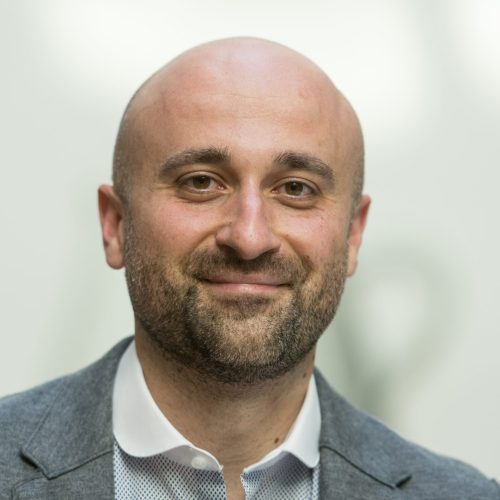
Matthias Leanza is a historical sociologist specialising in empires, colonialism and nation-state formation and is a senior lecturer at the University of Basel. In 2017, his dissertation received the Erasmus Prize for the Liberal Arts and Sciences. In 2019, he joined the Postdoc Network of the Center for Interdisciplinary Research (ZiF) at Bielefeld University. He was a visiting scholar at the Leibniz Center for Literary and Cultural Research in Berlin, the University of Virginia and the University of Michigan. In 2020, he co-founded the Historical Sociology Working Group in the German Sociological Association.
During his fellowship at global dis:connect, Matthias will complete his current book project on the legacy of German colonialism. Drawing on a wide range of sources from European and African archives, the study shows how and why the German overseas empire helped consolidate the nascent German nation-state. Germany soon lost its colonies, but their effects on the country persisted, leaving a complex legacy.
Click HERE for a list of publications.
Click HERE to email Matthias.
Matthias Leanza
Click HERE to email Matthias.
Matthias Leanza is a historical sociologist specialising in empires, colonialism and nation-state formation and is a senior lecturer at the University of Basel. In 2017, his dissertation received the Erasmus Prize for the Liberal Arts and Sciences. In 2019, he joined the Postdoc Network of the Center for Interdisciplinary Research (ZiF) at Bielefeld University. He was a visiting scholar at the Leibniz Center for Literary and Cultural Research in Berlin, the University of Virginia and the University of Michigan. In 2020, he co-founded the Historical Sociology Working Group in the German Sociological Association.
During his fellowship at global dis:connect, Matthias will complete his current book project on the legacy of German colonialism. Drawing on a wide range of sources from European and African archives, the study shows how and why the German overseas empire helped consolidate the nascent German nation-state. Germany soon lost its colonies, but their effects on the country persisted, leaving a complex legacy.
Nic Leonhardt
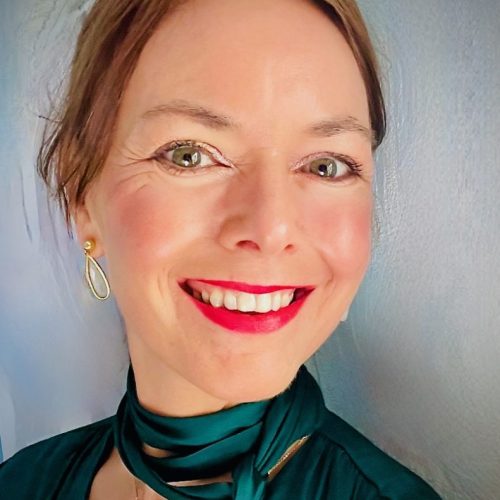
Nic Leonhardt is a theatre scholar and writer commenting on global theatre history; media, popular and visual cultures; and archiving and curating theatrical history. She has served as a senior researcher and fellow in multiple projects. Her latest monograph, Theatre Across Oceans. Mediators of Transatlantic Exchange (1890-1925), was published in 2021. She edits Global Theatre Histories and created the theatre history podcast Theatrescapes.
Nic is co-president of SIBMAS. Together with artist Reza Nassrollahi, she runs the global art and charity project 1001SOUL.
At global dis:connect, Nic will address the challenges of global theatre histories and the difficulties in understanding and writing a globally interconnected history of the performing arts. She will interrogate the gap between global and entangled histories, which are both shared and divided. This project invokes connections, disconnections and detours extending across research, knowledge transfer, methodology and epistemology.
Her research will cover two case studies on female theatre practitioners and networks in Europe and the USA (early 20th century) and in Iran (1940s and 1950s).
Click HERE for a list of publications.
Click HERE to email Nic.
Nic Leonhardt
Click HERE to email Nic.
Click HERE for a list of publications.
Nic Leonhardt is a theatre scholar and writer commenting on global theatre history; media, popular and visual cultures; and archiving and curating theatrical history. She has served as a senior researcher and fellow in multiple projects. Her latest monograph, Theatre Across Oceans. Mediators of Transatlantic Exchange (1890-1925), was published in 2021. She edits Global Theatre Histories and created the theatre history podcast Theatrescapes.
Nic is co-president of SIBMAS. Together with artist Reza Nassrollahi, she runs the global art and charity project 1001SOUL.
At global dis:connect, Nic will address the challenges of global theatre histories and the difficulties in understanding and writing a globally interconnected history of the performing arts. She will interrogate the gap between global and entangled histories, which are both shared and divided. This project invokes connections, disconnections and detours extending across research, knowledge transfer, methodology and epistemology.
Her research will cover two case studies on female theatre practitioners and networks in Europe and the USA (early 20th century) and in Iran (1940s and 1950s).
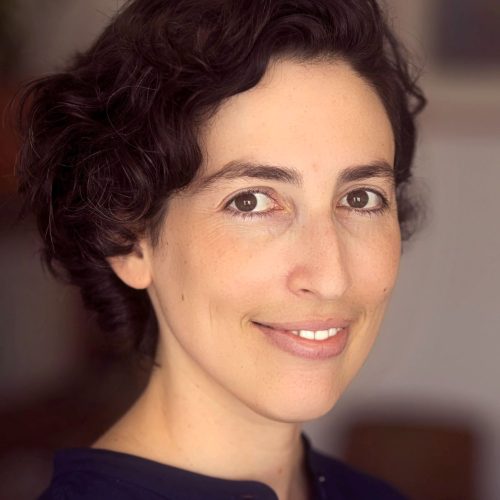
Ayala Levin
Ayala Levin is an associate professor of architectural history at the University of California, Los Angeles. Ayala specialises in architecture and urban planning in postcolonial African states with interest in the production of architectural knowledge as part of north-south or south-south exchange. She authored Architecture and Development: Israeli Construction in Sub Saharan Africa and the Settler Colonial Imagination (Duke University Press 2022), and she co-edited Architecture in Development: Systems and the Emergence of the Global South (Routledge 2022).
At global dis:connect, Ayala will research how U.S. planners sought to reorganise rural spaces in post-independence African states to curb urban migration. This project reframes conventional accounts of Third World urbanisation by directing attention to the entangled phenomenon of ruralisation, namely the modernisation of the countryside. It asks how the countryside was physically transformed to elevate standards of living, and how this transformation was employed to eradicate colonial precepts that associated modernity and social mobility exclusively with the city.
Click HERE for a list of publications.
Click HERE to email Ayala.
Ayala Levin
Click HERE to email Ayala.
Click HERE for a list of publications.
Ayala Levin is an associate professor of architectural history at the University of California, Los Angeles. Ayala specialises in architecture and urban planning in postcolonial African states with interest in the production of architectural knowledge as part of north-south or south-south exchange. She authored Architecture and Development: Israeli Construction in Sub Saharan Africa and the Settler Colonial Imagination (Duke University Press 2022), and she co-edited Architecture in Development: Systems and the Emergence of the Global South (Routledge 2022).
At global dis:connect, Ayala will research how U.S. planners sought to reorganise rural spaces in post-independence African states to curb urban migration. This project reframes conventional accounts of Third World urbanisation by directing attention to the entangled phenomenon of ruralisation, namely the modernisation of the countryside. It asks how the countryside was physically transformed to elevate standards of living, and how this transformation was employed to eradicate colonial precepts that associated modernity and social mobility exclusively with the city.
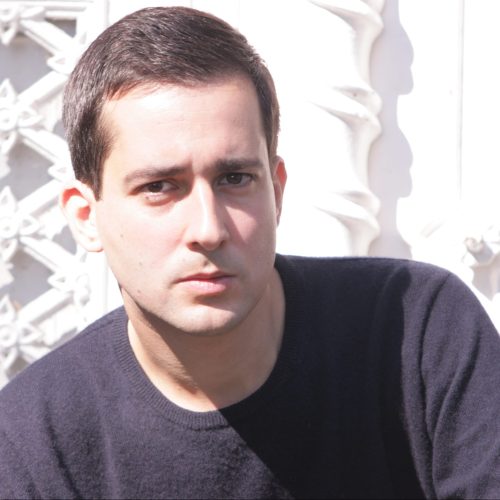
David Motadel
David Motadel is an associate professor of international history at the LSE. A former Gates Scholar at Cambridge, he has held visiting positions at Harvard, Yale, Oxford, Sciences Po and the Sorbonne. His articles have been published in numerous academic journals, including Past & Present, The American Historical Review and the Annales. His reviews and essays on current affairs have appeared in The New York Times, The Guardian, The New York Review of Books, The London Review of Books and The Times Literary Supplement, among others. He is a Fellow of the Royal Historical Society.
During his year at gd:c, David is working on a global history of Europe’s empires around the Second World War, 1935-1948, exploring the history of the war in the imperial world, its impact on colonial subjects; the history of the colonial soldiers who fought in Europe’s armies; the history of anti-colonial movements during the war, from the Viet Minh to the Quit India movement; and the war’s impact on the end of empire and twentieth-century world order. Drawing on multilingual literature and sources from five continents, the book provides a truly global view of the most cataclysmic conflict in human history.
Click HERE for a list of publications.
Click HERE to email David.
David Motadel
Click HERE to email David.
Click HERE for a list of publications.
David Motadel is an associate professor of international history at the LSE. A former Gates Scholar at Cambridge, he has held visiting positions at Harvard, Yale, Oxford, Sciences Po and the Sorbonne. His articles have been published in numerous academic journals, including Past & Present, The American Historical Review and the Annales. His reviews and essays on current affairs have appeared in The New York Times, The Guardian, The New York Review of Books, The London Review of Books and The Times Literary Supplement, among others. He is a Fellow of the Royal Historical Society.
During his year at gd:c, David is working on a global history of Europe’s empires around the Second World War, 1935-1948, exploring the history of the war in the imperial world, its impact on colonial subjects; the history of the colonial soldiers who fought in Europe’s armies; the history of anti-colonial movements during the war, from the Viet Minh to the Quit India movement; and the war’s impact on the end of empire and twentieth-century world order. Drawing on multilingual literature and sources from five continents, the book provides a truly global view of the most cataclysmic conflict in human history.
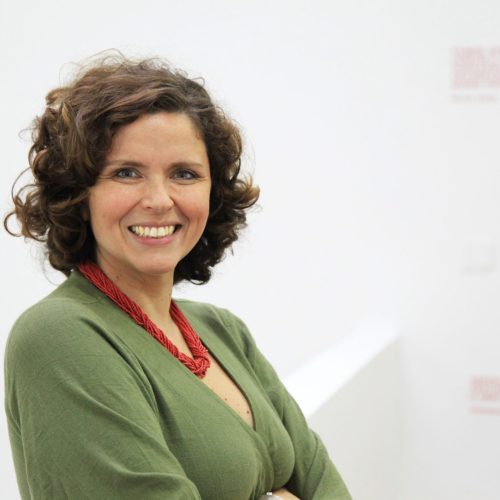
Sabrina Moura
Sabrina Moura is a researcher and curator from Brazil. She holds a Ph.D. in art history from the University of Campinas. She authored Arqueologia da Criação [Archeology of Creation, 2022] — a book on the work of Brazilian artist Rossini Perez — and edited Southern Panoramas: Perspectives for other geographies of thought (2015), which presents historical and artistic perspectives on the Global South. Her work has featured in Mousse Magazine, Zeitschrift für Kulturwissenschaften, Stedelijk Studies Journal, African Art, Critical Internventions, 3rd Text Africa, among others.
At global dis:connect, Sabrina is developing Travelling Back: reframing a Munich expedition to Brazil in the 19th century, a project that deals with contemporary visual and performative strategies focused on the restitution of absent agencies in the history of the natural sciences. This research analyses museological and display policies around collections that were gathered during 19th-century expeditions of exploration and are held in Munich institutions, integrating decolonial theories, exhibition histories and museum studies.
Click HERE for a list of publications.
Click HERE to email Sabrina.
Sabrina Moura
Click HERE to email Sabrina.
Click HERE for a list of publications.
Sabrina Moura is a researcher and curator from Brazil. She holds a Ph.D. in art history from the University of Campinas. She authored Arqueologia da Criação [Archeology of Creation, 2022] — a book on the work of Brazilian artist Rossini Perez — and edited Southern Panoramas: Perspectives for other geographies of thought (2015), which presents historical and artistic perspectives on the Global South. Her work has featured in Mousse Magazine, Zeitschrift für Kulturwissenschaften, Stedelijk Studies Journal, African Art, Critical Internventions, 3rd Text Africa, among others.
At global dis:connect, Sabrina is developing Travelling Back: reframing a Munich expedition to Brazil in the 19th century, a project that deals with contemporary visual and performative strategies focused on the restitution of absent agencies in the history of the natural sciences. This research analyses museological and display policies around collections that were gathered during 19th-century expeditions of exploration and are held in Munich institutions, integrating decolonial theories, exhibition histories and museum studies.

Günther Sandner
Günther Sandner is a political scientist and historian. He works as a research fellow at the Institute Vienna Circle (University of Vienna) and teaches civic education extramurally. His research includes the history of logical empiricism and Isotype. His recent publications include Weltsprache ohne Worte. Rudolf Modley, Margaret Mead und das Glyphs-Projekt (2022); Logical Empiricism, Life Reform and the German Youth Movement (ed. with Christian Damböck and Meike Werner. 2022); and History and Legacy of Isotype (with Christopher Burke, forthcoming 2023).
Günther’s project, Following Isotype: visual languages and universal symbols in the decades after 1945, deals with projects that aimed to overcome the active absence of a universal language and to establish one with the help of pictures, graphics, symbols and pictograms. Its focus is on the 1950s and 1960s. Three visual language models that interacted with each other to varying degrees are examined as examples: Marie Neurath’s Isotype (after Otto Neurath’s death), Margaret Mead’s and Rudolf Modley’s Glyphs and Charles Bliss’ Semantography.
Click HERE for a list of publications.
Click HERE to email Günther.
Günther Sandner
Click HERE to email Günther.
Click HERE for a list of publications.
Günther Sandner is a political scientist and historian. He works as a research fellow at the Institute Vienna Circle (University of Vienna) and teaches civic education extramurally. His research includes the history of logical empiricism and Isotype. His recent publications include Weltsprache ohne Worte. Rudolf Modley, Margaret Mead und das Glyphs-Projekt (2022); Logical Empiricism, Life Reform and the German Youth Movement (ed. with Christian Damböck and Meike Werner. 2022); and History and Legacy of Isotype (with Christopher Burke, forthcoming 2023).
Günther’s project, Following Isotype: visual languages and universal symbols in the decades after 1945, deals with projects that aimed to overcome the active absence of a universal language and to establish one with the help of pictures, graphics, symbols and pictograms. Its focus is on the 1950s and 1960s. Three visual language models that interacted with each other to varying degrees are examined as examples: Marie Neurath’s Isotype (after Otto Neurath’s death), Margaret Mead’s and Rudolf Modley’s Glyphs and Charles Bliss’ Semantography.
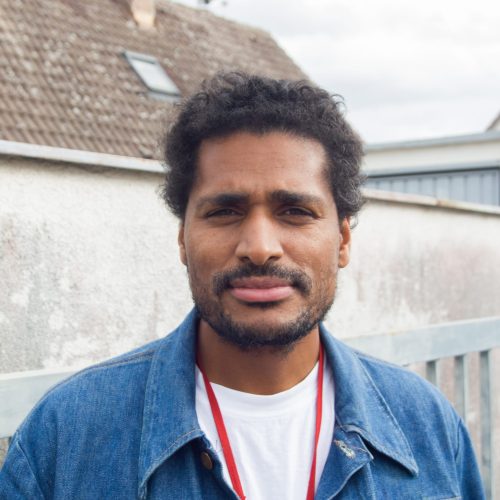
Julian Warner
artist fellow
Julian Warner is an artist and curator. He is the current artistic director of the Brechtfestival Augsburg and a performer and musician going by the stage name of Fehler Kuti. He is the editor of an anthology on questions regarding decolonial critique in Germany After Europe. Beiträge zur dekolonialen Kritik (Verbrecher Verlag, 2021) and was a visiting professor for dramaturgy at the Karlsruhe University of Arts and Design in 2022-23.
During his fellowship at global dis:connect, Julian will critically reflect on his curatorial practice, which positions itself at the intersection of globally circulating symbolic goods and locally specific contexts. Which contradictions and conflicts arise when international artists and projects engage with local institutions, audiences, and struggles? How may we further our understanding of such overdetermined constellations?
Click HERE to email Julian.
Julian Warner
artist fellow
Click HERE to email Julian.
Julian Warner is an artist and curator. He is the current artistic director of the Brechtfestival Augsburg and a performer and musician going by the stage name of Fehler Kuti. He is the editor of an anthology on questions regarding decolonial critique in Germany After Europe. Beiträge zur dekolonialen Kritik (Verbrecher Verlag, 2021) and was a visiting professor for dramaturgy at the Karlsruhe University of Arts and Design in 2022-23.
During his fellowship at global dis:connect, Julian will critically reflect on his curatorial practice, which positions itself at the intersection of globally circulating symbolic goods and locally specific contexts. Which contradictions and conflicts arise when international artists and projects engage with local institutions, audiences, and struggles? How may we further our understanding of such overdetermined constellations?